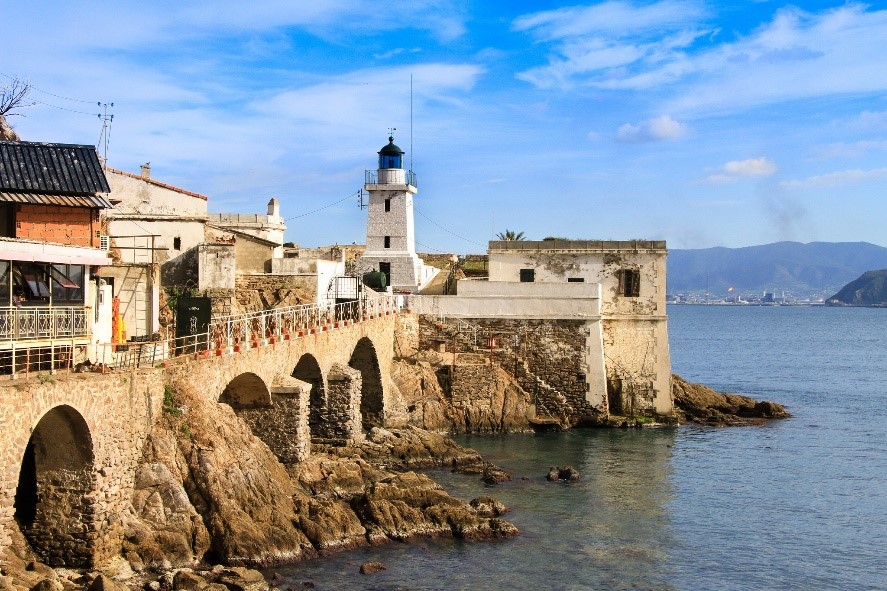
Reef Lights in Algeria: Signaling Submerged Hazards
Reef lights in Algeria represent essential safety devices designed to ensure the protection of vessels operating along the coastline. Indeed, the presence of these light signals helps prevent major accidents when navigating near invisible natural obstacles. This is why the National Office of Maritime Signaling places paramount importance on deploying this equipment across every hazardous reef within the public maritime domain.
What Is a Reef Hazard and Why Mark It?
By definition, a reef hazard (or rock) refers to a rock or sandbar flush with the water’s surface over which waves break violently. Whether along a rocky coastline, in open seas, or amidst reef-strewn waters, the presence of these topographical structures poses a continuous danger to commercial navigation and fishing activities. Consequently, these hazards are marked by long-range lighthouses or, more specifically, by sector/wake lights installed directly on reefs, islands, and isolated rocks.
The Strategic Importance of Coastal Signaling
The geological layout of our coastline alternates between broad sandy bays and steep cliffs surrounded by submerged reefs. In this context, the modernization of lighting infrastructure makes it possible to visually map out these threats. Thanks to rigorous maintenance, mariners can instantly identify clear-water avoidance zones, even during severely degraded winter weather conditions.